


From building codes to mobility restrictions and new diplomatic roles within city governments, climate policy is increasingly being shaped at the local level through a widening range of legislative and institutional tools. Cities as varied as Sydney, Boston, New York, Paris, Miami, and dozens across Latin America are adopting targeted strategies that reflect their distinct environmental pressures and governance structures. These initiatives range from all-electric and net-zero construction requirements, to traffic-control measures designed to curb the social costs of private vehicle use, to emerging forms of urban diplomacy that coordinate responses to rising temperatures and biodiversity loss. Together, these approaches illustrate how territorial management is evolving in response to the accelerating climate crisis, and how local governments are experimenting with regulation and collaboration to confront challenges that are at once global and deeply place-specific.





Building in a New Environmental Scenario: Efforts to Reduce the Impact of New Construction
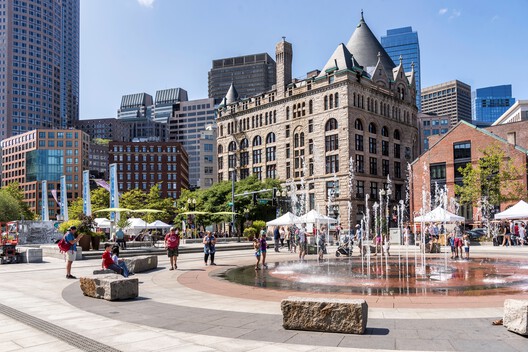
In the current context, where the construction industry generates nearly 40% of global carbon emissions, reducing the environmental impact of new construction may sound practically absurd. However, definitions of sustainability include systemic factors that also call for addressing housing shortages, recreational spaces, and public spaces, aiming for social sustainability through architecture and urban design. It is within this effort that local governments resort to regulatory tools for the approval of new construction. This is the case in Sydney, where the City recently granted final endorsement to planning amendments that will require new residential buildings, medium- to large-scale commercial buildings, hotels, and serviced apartment buildings to operate fully on electricity starting 1 January 2027. This means a transition from gas to electricity in response to the challenges posed by fossil fuels and the possibility of reducing consumer costs. Food and beverage premises within mixed-use developments will still be permitted to use gas, provided there is adequate space and electrical capacity for future electrification.
Earlier this year, the Boston city government also approved an amendment to the city's zoning code that requires most large new buildings to have net-zero carbon emissions from the day they open. The amendment sets a net-zero emissions standard for new project filings after July 1, 2025, that include 15 units or more, measure at least 20,000 square feet, or add 50,000 square feet or more to existing buildings. As in Sydney, electrification is considered one of the possible measures to minimize emissions, along with incorporating renewable energy sources. The policy takes a "phased-in approach" for hospitals, general manufacturing sites, and labs. According to the City government, in Boston, buildings account for nearly 71% of community carbon emissions, and by adjusting operational performance requirements for new buildings, the City could accelerate progress toward its goal of becoming carbon-neutral by 2050, institutional commitments serving as administrative tools for offsetting the effects of climate change.
Overcoming Barriers to Sustainable Mobility: Policies to Lower the Social Costs of Private Car Use
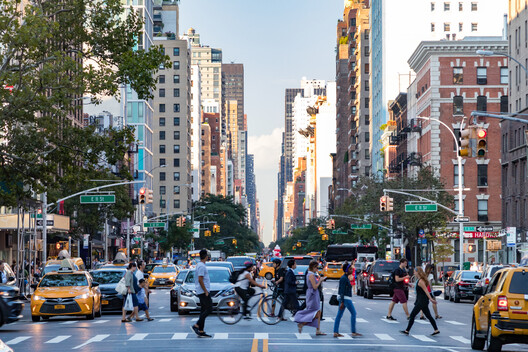
New York City's long-awaited congestion pricing policy came into effect in January 2025, explicitly intended to support public transit and reduce both traffic and pollution. The policy consists of a system of tolls for vehicles entering Manhattan's central business district south of 60th Street. The fees, varying by vehicle type and time of day, aim to cut congestion and emissions, with revenue allocated to public transit improvements. Although the measure has been in force for about a year, it has repeatedly been questioned and challenged in legislative proceedings, showing that policymaking does not necessarily guarantee lasting change. Congestion pricing is said to be working, even though numerous lawsuits have been filed since the program began, including one against the Governor of New York over the decision to pause the plan. Preliminary observations highlight its positive impact on shared transportation systems, including taxis and private buses.
Another city marking anniversaries for its measures to control car traffic is Paris. The first plan for the Restricted Traffic Zone dates back to May 2021 but was officially implemented in November 2024, ahead of the Olympic Games. The restriction bans private cars from entering four central arrondissements if their final destination lies outside the zone, which covers five square kilometers. To date, the measure appears to have reduced congestion at levels similar to New York's results. In September, however, the mayor's office decided to extend the educational transition phase of the program until 2026 before beginning to issue fines. Notably, despite the benefits associated with electric transportation systems, the measure also bans privately owned electric scooters. Paris had already banned publicly rented e-scooters in September 2023 after a referendum in which a majority of voters supported the ban, following concerns over safety, clutter, and perceived danger.
Urban Diplomacy in Land Management: Emerging Policy Roles in the Climate Crisis

Long before legislation comes dialogue. In terms of public policy, a renewed vision of the roles responsible for putting climate issues on the agenda may be essential for future change. As rising temperatures become an increasing threat, the first Chief Heat Officer was appointed in Miami-Dade County, Florida, in 2021, inspiring other cities across the United States, Europe, Latin America, Africa, and Australia. The role focuses on developing heat-resilience strategies within local governments and coordinating city-wide efforts across public and private entities. The principle behind the position is to treat rising temperatures as an ongoing challenge, not only a crisis-driven one. Such measures aim to coordinate actors whose individual capacities are insufficient to address the cross-border nature of climate events, requiring not only positions but collective action.
In this direction of collective action, in Latin America, around 180 local governments from 17 countries are represented in La Red de BiodiverCiudades ("The BiodiverCities Network"), promoted by CAF, The Development Bank of Latin America and the Caribbean, in partnership with the Alexander von Humboldt Biological Resources Research Institute and the United Nations Human Settlements Program (UN-Habitat). The alliance consists of a commitment to collaborate in transforming cities through nature, incorporating biodiversity into urban planning and management as a foundation for socioeconomic development and improved quality of life. Since 2021, nine meetings have been held among participating entities, alongside efforts to facilitate access to training, technical assistance, and financial support for project development.
In other news regarding cities and urban design, RSHP recently announced the completion of the Barangaroo South Masterplan in Sydney, marking the realization of a 15-year redevelopment that has reconnected the city's north-western harbour edge to its urban core. In the United States, SHoP Architects completed the First Stage of Hudson's Detroit mixed-use development. In the United Kingdom, London-based charity Make Space for Girls recently launched a new strategy for gender-inclusive public spaces, while in Lebanon, UNESCO launched new restoration projects in Beirut following the 2020 explosion.


